Safety
Staying hydrated with an ostomy
With an ileostomy you lose more water and salt than before, so dehydration is one of the most common problems after surgery. Here is how much to drink and the warning signs.
General information, not medical advice. Your surgeon, ostomy nurse or dietitian may give you different instructions for your surgery and your body; follow theirs first. Medical disclaimer.
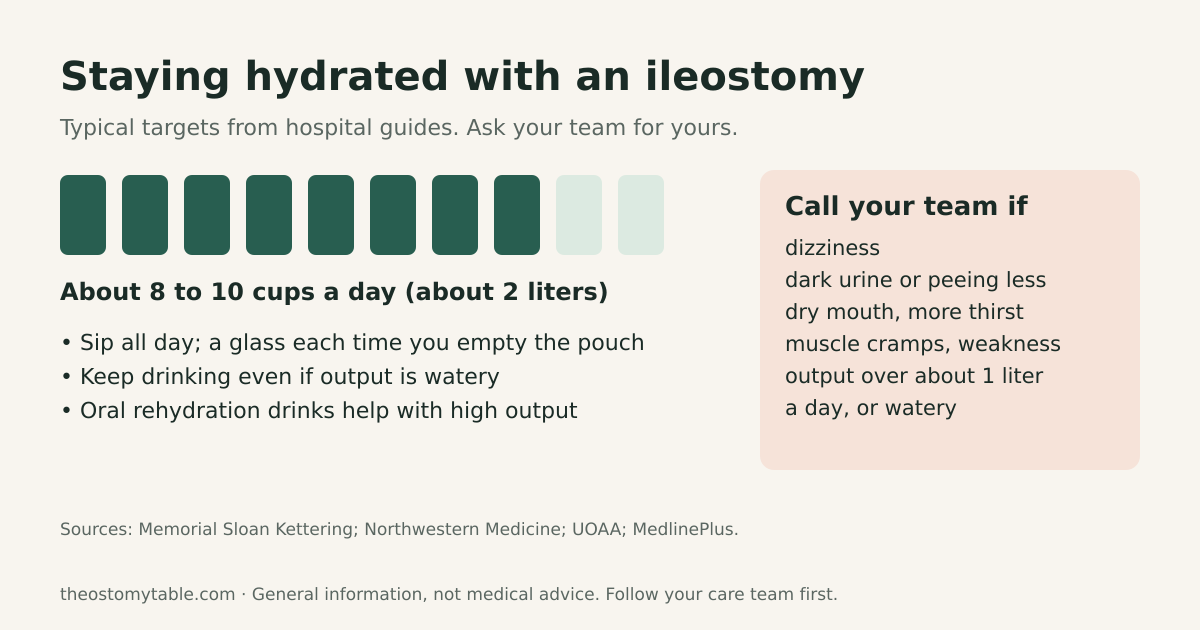
Call your care team if you have signs of dehydration: dizziness, dark urine or peeing less, a dry mouth, more thirst than usual, headaches, muscle cramps, weakness, or output that is very watery or much more than usual.
Why it matters more with an ileostomy
The colon's main job is to absorb water. With an ileostomy, that water and salts such as sodium and potassium leave in your output instead. UOAA notes that dehydration is one reason people are readmitted to the hospital after surgery, and Memorial Sloan Kettering warns that being dehydrated even for less than a day can lead to kidney problems.
How much to drink
Hospital guides commonly suggest about 8 to 10 cups (8-ounce glasses) of fluid a day, about 2 liters, and more in hot weather or when you are active. MedlinePlus suggests talking with your provider about the right amount for you.
Tips from the guides:
- Sip through the day rather than drinking a lot at once.
- Drink a glass of fluid each time you empty your pouch (Northwestern).
- Keep drinking even if output is watery. Drinking less does not thicken output, and it can lead to dehydration (Memorial Sloan Kettering).
- Some guides suggest drinking less with meals and more between them, which can help thicken output. Ask your team.
What to drink
- Water, broth, diluted juice, vegetable juice and gelatin are on UOAA's list of fluids after surgery.
- Oral rehydration drinks replace fluid and salts quickly, especially with high output.
- Sports drinks: Memorial Sloan Kettering includes them; Northwestern cautions that sugary or artificially sweetened ones may raise ileostomy output. Ask your team which they prefer.
Drinks that can work against you: caffeinated coffee and tea, alcohol, sugary drinks and soda, and sugar-free drinks with sugar alcohols such as sorbitol.
High output
Northwestern defines high output as more than 1 liter a day; Memorial Sloan Kettering says to call if output is more than about 1,000 milliliters a day or watery. UOAA describes a goal of about 600 to 900 milliliters a day. Foods that may help thicken output include applesauce, bananas, white rice, pasta, peeled potatoes, plain crackers, pretzels, creamy peanut butter and cheese. See foods that thicken output.
Salty foods such as broth, pretzels and saltines, and potassium foods such as bananas and potatoes, help replace what you lose.
Common questions
How much water should I drink with an ileostomy?
Hospital guides commonly suggest about 8 to 10 cups (around 2 liters) of fluid a day, more in heat or with activity. Ask your care team for your own target.
What are the signs of dehydration with an ostomy?
Dizziness, dark urine or peeing less, dry mouth, extra thirst, headaches, muscle cramps, weakness, and very watery or high output. Call your care team if you notice them.
What is high ostomy output?
Northwestern Medicine defines high output as more than 1 liter (1,000 milliliters) a day. Memorial Sloan Kettering says to call your doctor if output is above that or watery.
Are sports drinks good for an ileostomy?
Sources differ. Memorial Sloan Kettering includes sports drinks, while Northwestern cautions that sugary or sugar-free sweetened ones may increase output and suggests oral rehydration drinks. Ask your team.
Sources
Last checked November 27, 2026.
- mskcc.org/cancer-care/patient-education/diet-guidelines-people-ileostomy
- nm.org/conditions-and-care-areas/gastroenterology/digestive-health-center/interv
- ostomy.org/wp-content/uploads/2022/02/Eating_with_an_Ostomy_2022-02.pdf
- medlineplus.gov/ency/patientinstructions/000070.htm
- medlineplus.gov/ency/patientinstructions/000074.htm
- health.ucdavis.edu/surgery/documents/ileostomy-nutrition.pdf
Foods on this page
- BrothDrinksEarly: usually fineUsually yes, even in the first weeks. Broth counts toward your fluids and adds sodium, which you lose more of with an ileostomy.
- Oral rehydration drinksDrinksEarly: usually fineUsually yes, even in the first weeks. Oral rehydration drinks replace fluid and salts quickly and are on the early drink list. They are especially useful with high ileostomy output.
- PretzelsSnacksEarly: usually fineUsually yes, even in the first weeks. Pretzels are on the early lists, help thicken output and add salt. MedlinePlus notes pretzels may help reduce water loss in stool.
- Saltine crackersSnacksEarly: usually fineUsually yes, even in the first weeks. Plain crackers such as saltines are on the early lists, help thicken output, and add a little salt, which matters with an ileostomy.
- Sports drinksDrinksEarly: with careOften yes, with care. Memorial Sloan Kettering lists sports drinks among drinks to include and for replacing fluid. Northwestern cautions that sugary or sugar-free sweetened sports drinks may increase ileostomy output and suggests oral rehydration drinks instead. Ask your team which they prefer.
- WaterDrinksEarly: usually fineUsually yes, even in the first weeks. Water is the base of staying hydrated, which matters most with an ileostomy. Hospital guides commonly suggest around 8 to 10 cups of fluid a day; ask your team for your own target.