After surgery
Eating in the first weeks after ostomy surgery
Most care teams start you on soft, low-fiber food while the bowel heals. Here is what that usually means, how long it lasts, and how to add foods back.
General information, not medical advice. Your surgeon, ostomy nurse or dietitian may give you different instructions for your surgery and your body; follow theirs first. Medical disclaimer.
Why a low-fiber diet first
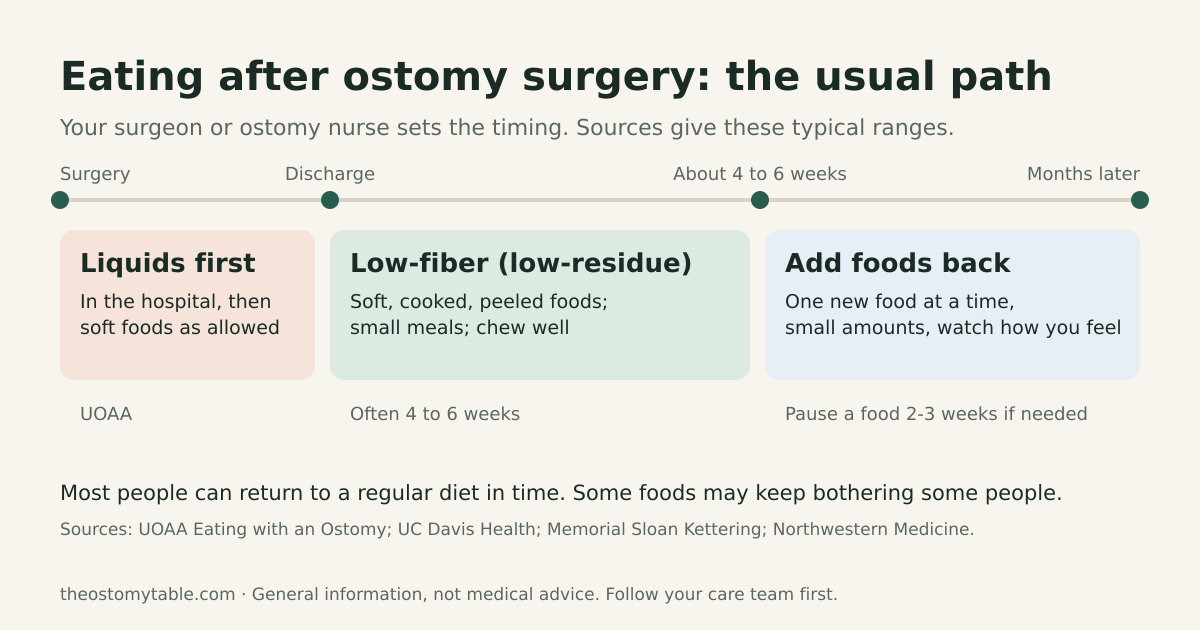
After surgery the stoma is swollen. Care teams usually prescribe a low-fiber (low-residue) diet to lower the chance of a food blockage while the swelling goes down, and to give the gut time to heal. UOAA notes it also tends to mean less gas and easier digestion.
How long it lasts
It is temporary. UOAA says about 4 to 6 weeks, UC Davis Health and Northwestern Medicine say about 6 weeks, and Memorial Sloan Kettering says your doctor may start you on higher-fiber foods at your first follow-up visit, about 2 weeks after surgery. Your surgeon or ostomy nurse decides the timing for you.
What the first weeks usually look like
- Grains: white bread, white rice, white pasta, plain crackers, refined cereals such as Cream of Wheat or Rice Krispies.
- Protein: tender chicken, turkey or fish, ground meat, eggs, tofu, smooth peanut butter.
- Fruit: canned fruit (not pineapple), applesauce, ripe bananas, peeled soft fruit.
- Vegetables: well-cooked vegetables without skins or seeds, such as carrots, beets and peeled potatoes.
- Dairy: low-fat milk, yogurt, mild cheese, if you tolerate them.
Usually set aside for now: raw vegetables and salads, fruit skins and seeds, dried fruit, nuts and seeds, popcorn, corn, whole grains, beans and lentils, and tough or fried meats. See the full list of foods usually fine in the first weeks and the blockage foods.
Habits the hospital guides agree on
- Chew very well. UC Davis Health says to chew food until it is the texture of applesauce.
- Eat small meals often. Several guides suggest about six small meals a day instead of three large ones.
- Eat your biggest meal earlier. Two guides suggest making midday the largest meal to cut down on output at night.
- Drink enough. About 8 to 10 cups of fluid a day is a common target, especially with an ileostomy. See hydration.
- Skip straws and chewing gum, which make you swallow air.
Adding foods back
When your team says it is time, add one new food at a time in a small amount, and watch how you feel. Northwestern suggests one new fiber-rich food every few days, starting with foods you ate without trouble before surgery. If a food causes cramping, bloating, gas or loose output, stop it for 2 to 3 weeks and then try a little again. UC Davis Health notes that, generally, there are no foods you must give up forever.
A food journal helps: UOAA offers a free one, and it is useful to bring to appointments.
Ileostomy or colostomy?
The early diet is similar for both. People with an ileostomy are at greater risk of food blockages and dehydration, so the blockage and fluid advice matters most for them. With a colostomy, constipation can come up; UOAA's food chart lists higher-fiber foods, warm drinks and water among the things that help.
Common questions
How long do I need to follow a low-residue diet after ostomy surgery?
Usually a few weeks. UOAA says about 4 to 6 weeks and several hospital guides say about 6 weeks, but your surgeon or ostomy nurse sets the timing.
What can I eat the first week after an ileostomy?
Soft, low-fiber foods such as white rice, white bread, plain crackers, applesauce, ripe bananas, eggs, tender chicken or fish, smooth peanut butter, peeled potatoes and well-cooked vegetables without skins, if your team has cleared you for solid food.
When can I eat salad again after an ostomy?
Raw vegetables and salads are usually added back after the low-fiber stage, once your care team says so. Start with a small amount, chew it very well, and add one new food at a time.
Do I have to avoid some foods forever?
Usually not. UC Davis Health says there are generally no foods you need to permanently avoid, though some people find certain foods keep bothering them.
Sources
Last checked November 27, 2026.
- ostomy.org/wp-content/uploads/2022/02/Eating_with_an_Ostomy_2022-02.pdf
- health.ucdavis.edu/surgery/documents/ileostomy-nutrition.pdf
- mskcc.org/cancer-care/patient-education/diet-guidelines-people-ileostomy
- nm.org/conditions-and-care-areas/gastroenterology/digestive-health-center/interv
- nm.org/conditions-and-care-areas/gastroenterology/digestive-health-center/interv
- medlineplus.gov/ency/patientinstructions/000070.htm
- ostomy.org/wp-content/uploads/2022/02/Food_Reference_Chart_2022-02.pdf
Foods on this page
- ApplesauceFruitEarly: usually fineUsually yes, even in the first weeks. Applesauce is soft, low in fiber and on the thickening lists from UOAA and every hospital guide we use, so it is a common choice in the first weeks and when output is loose.
- BananasFruitEarly: usually fineUsually yes, even in the first weeks. Ripe bananas are on the early lists and are one of the most common foods suggested to thicken loose output. One hospital guide says to keep it to one small ripe banana a day for the first 3 to 4 weeks, because too much banana can cause a blockage with an ileostomy.
- Canned fruitFruitEarly: usually fineUsually yes, even in the first weeks. Canned fruit is soft and on the early lists from UOAA and hospital guides, with one exception: canned pineapple, which sources leave off.
- ChickenMeat, fish, eggs and beansEarly: usually fineUsually yes, even in the first weeks. Skinless, tender chicken is on the early lists. UOAA notes that getting enough protein helps healing after surgery.
- EggsMeat, fish, eggs and beansEarly: usually fineUsually yes, even in the first weeks. Eggs are on the early lists, but they can cause gas and a strong odor. Memorial Sloan Kettering suggests starting with one egg.
- Peanut butterMeat, fish, eggs and beansEarly: usually fineUsually yes, even in the first weeks. Creamy peanut butter is on the early lists and helps thicken output. Crunchy peanut butter is not: the nut pieces are the problem. One guide suggests starting with a small amount because nut butters can add odor.
- PotatoesVegetablesEarly: usually fineUsually yes, even in the first weeks. Peeled potatoes are on the early lists and are one of the best-known foods for thickening loose output. The skins are the part to skip at first.
- White bread and toastBreads, grains and cerealsEarly: usually fineUsually yes, even in the first weeks. White bread and toast are on the early lists and help thicken loose output.
- White riceBreads, grains and cerealsEarly: usually fineUsually yes, even in the first weeks. White rice is a staple of the early low-fiber diet and one of the most common foods for thickening loose output.